How to Select the Best FIBC Liner Manufacturer for Your Packaging Needs
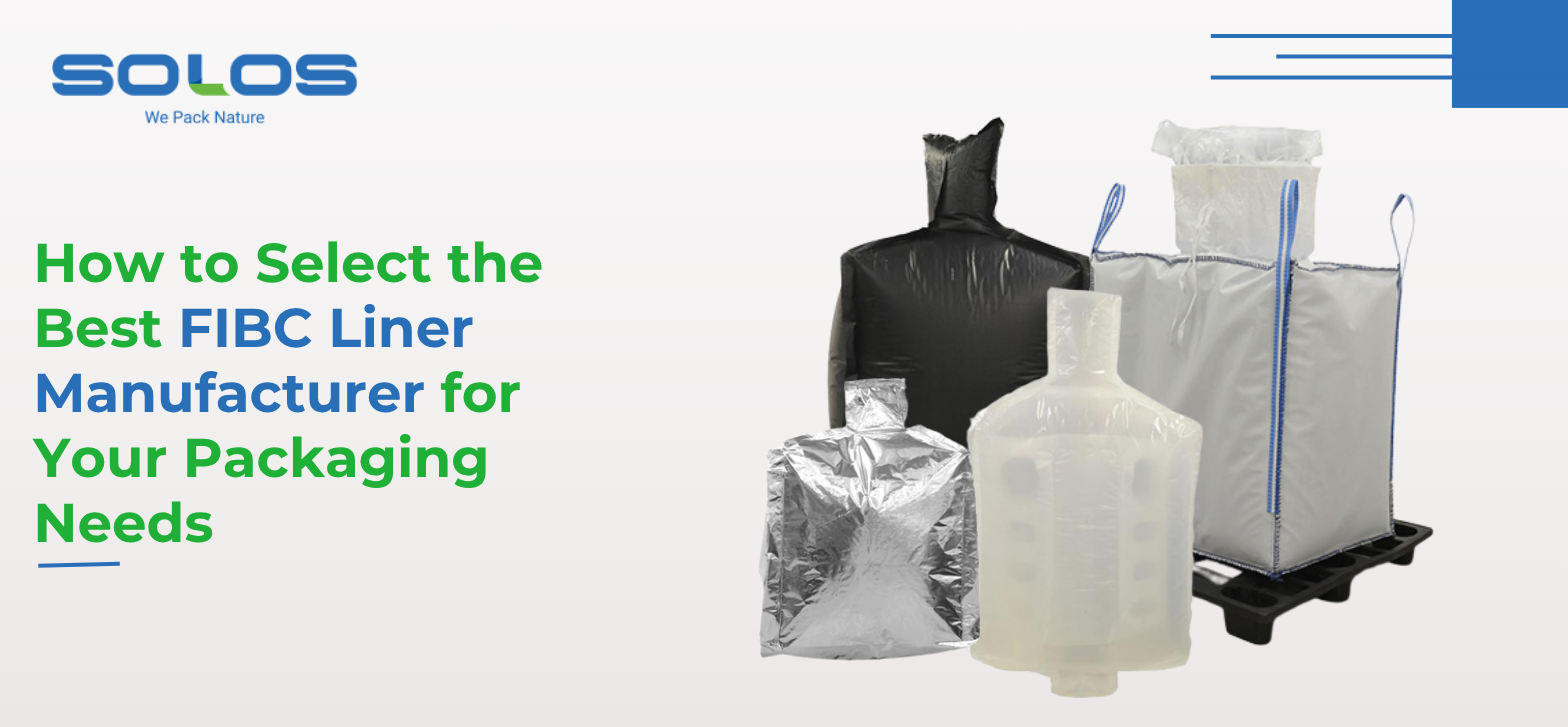
Choosing the right FIBC liner manufacturer can have a direct impact on product protection, packaging efficiency and overall supply chain performance. An FIBC liner is more than an additional layer placed inside a bulk bag. The right liner can help protect sensitive materials from moisture, contamination, oxygen and chemical exposure while making filling, storage and transportation more efficient.
However, not every manufacturer offers the same level of material quality, customization, technical expertise or production consistency. Businesses handling powders, chemicals, food ingredients, pharmaceuticals, agricultural products and other bulk materials need to evaluate manufacturers carefully before making a purchasing decision.
So, how do you identify the right FIBC liner manufacturer for your requirements? The answer lies in looking beyond price and evaluating material selection, manufacturing capabilities, liner design, quality control, customization and long-term reliability.
What is an FIBC Liner?
An FIBC liner is a flexible liner designed to fit inside a Flexible Intermediate Bulk Container, commonly known as an FIBC or Jumbo Bag. It creates an additional protective barrier between the packaged product and the outer woven bag.
Depending on the application, an FIBC liner can help provide protection against moisture, dust, oxygen, contamination and certain chemical interactions. This makes liners particularly useful when the packaged material requires a higher level of protection than a standard FIBC can provide on its own.
FIBC liners are available in different designs and materials to suit specific packaging requirements. Common options include form-fit liners, lay-flat liners, food-grade liners and antistatic or conductive liners. Material selection can also vary depending on the required barrier, strength and application.
The right liner therefore needs to be selected according to the product, filling process, transportation conditions and storage requirements rather than simply choosing a standard option.
Why Does the FIBC Liner Manufacturer Matter?
An FIBC liner may look like a relatively simple packaging component, but its performance depends on several manufacturing factors.
A manufacturer with appropriate production capabilities can help ensure consistent dimensions, material thickness, sealing quality and overall liner performance. Poorly manufactured liners may create problems during filling, handling or transportation, potentially resulting in leakage, contamination or product loss.
A reliable manufacturer can also help businesses determine whether they need a standard LDPE liner, a specialized barrier solution, an antistatic liner or another customized construction.
For businesses purchasing FIBC liners in large quantities, manufacturing consistency is particularly important. A liner that performs well in one shipment but varies significantly in another can create operational challenges and unnecessary costs.
7 Factors to Consider When Choosing an FIBC Liner Manufacturer
1. Evaluate the Manufacturer’s Material Expertise
The material used for an FIBC liner directly affects its performance. Different products require different levels of moisture resistance, chemical resistance, flexibility, strength or barrier protection.
For example, polyethylene-based liners can be suitable for many general bulk packaging applications, while specialized structures may be required when stronger barrier properties are needed.
Some FIBC liner solutions include LDPE, antistatic materials, aluminium-based barrier structures and EVOH options. Solos Polymers lists multiple FIBC liner variations designed for different packaging requirements.
Before selecting a manufacturer, ask:
- What materials are available?
- Can the liner material be matched to the packaged product?
- Is the material suitable for the intended storage and transportation conditions?
- Can the manufacturer provide customized material structures?
A knowledgeable manufacturer should be able to explain the advantages and limitations of different materials rather than simply offering one standard liner.
2. Check the Available FIBC Liner Designs
The liner’s design is just as important as its material.
Different FIBC applications may require different liner configurations. Form-fit liners, for example, are designed to fit closely within the FIBC and can support efficient filling while providing additional product protection. Lay-flat liners are another option, generally supplied in a fixed configuration with an opening at the top and a sealed end.
When comparing manufacturers, check whether they can supply designs suited to your FIBC dimensions and filling process.
Consider factors such as:
- Liner dimensions
- Filling and discharge requirements
- Top and bottom configuration
- Fit inside the FIBC
- Sealing method
- Product flow characteristics
- Handling and transportation conditions
A good manufacturer should be able to discuss these requirements before recommending a liner.
3. Look for Customization Capabilities
Not every FIBC application can be served effectively with an off-the-shelf liner.
Your product may require a specific liner size, thickness, opening, sealing configuration or material structure. Customized liners can help create a better fit within the FIBC and support more efficient packaging operations.
This is why customization should be an important part of your supplier evaluation.
Ask whether the manufacturer can adjust:
- Dimensions
- Film thickness
- Material composition
- Liner shape
- Opening configuration
- Sealing configuration
- Barrier properties
- Antistatic properties
A manufacturer capable of providing customized packaging solutions can be particularly valuable for businesses with specialized bulk packaging requirements.
4. Assess Quality Control and Manufacturing Consistency
Quality should never be evaluated only by inspecting one sample.
For regular FIBC liner procurement, businesses need confidence that the manufacturer can maintain consistent quality across production batches. Variations in film thickness, dimensions, sealing or material properties can affect liner performance.
A strong quality system should include process monitoring, material control and appropriate testing throughout production.
Solos Polymers states that its quality approach includes process control, in-process testing, analysis of production trends, control of process parameters and internal and external auditing.
When evaluating an FIBC liner manufacturer, ask about:
- Raw material quality control
- Film thickness consistency
- Seal strength
- Dimensional accuracy
- Production testing
- Batch consistency
- Quality documentation
These details can provide a better indication of long-term reliability than price alone.
5. Consider the End Application
The best FIBC liner depends heavily on what you are packaging.
Food ingredients may require different considerations from industrial chemicals. Fine powders may need different protection compared with granules or other bulk materials.
An FIBC liner can be used in applications where protection from moisture, oxygen, contamination or chemical exposure is important. Solos Polymers’ existing industrial liner guidance also identifies applications across food processing, chemicals, agriculture, pharmaceuticals and bulk industrial packaging.
Before selecting a manufacturer, clearly explain:
- What product will be packed?
- Is it a powder, granule or another bulk material?
- Does it require moisture protection?
- Is oxygen exposure a concern?
- Are antistatic properties required?
- How will the FIBC be filled and discharged?
- How long will the product remain in storage?
- Will it be transported domestically or internationally?
The more accurately you define the application, the easier it becomes to select an appropriate liner.
6. Review Production Capacity and Delivery Reliability
Quality is important, but reliable supply matters too.
If your business uses thousands of FIBC liners every month, delays can affect production schedules, inventory planning and customer deliveries. Your manufacturer should therefore have sufficient production capability to handle your expected volumes.
Ask potential suppliers about:
- Production capacity
- Standard lead times
- Custom order lead times
- Minimum order quantities
- Repeat-order consistency
- Delivery schedules
- Ability to handle seasonal demand
Solos Polymers highlights its manufacturing capabilities, customized packaging solutions and response to seasonal requirements as part of its overall packaging offering.
A supplier that understands your expected demand can help make procurement more predictable.
7. Compare Total Value, Not Just Price
Price is naturally an important consideration, but selecting the cheapest FIBC liner can become expensive if the product causes operational problems.
A low-cost liner that tears, leaks, does not fit correctly or provides inadequate protection can result in:
- Product wastage
- Repacking costs
- Production delays
- Contamination risks
- Transportation issues
- Customer complaints
Instead of comparing only the price per liner, consider the total value provided by the manufacturer.
Look at material quality, product consistency, customization, technical support, delivery reliability and expected performance. A slightly higher initial cost may provide better overall value if it reduces product loss and operational problems.
Common Mistakes to Avoid When Selecting an FIBC Liner Supplier
Businesses often make supplier decisions based on limited information. Avoid these common mistakes:
Choosing Only on Price
The lowest quotation does not necessarily represent the lowest overall cost. Poor-quality liners can increase waste and operational expenses.
Ignoring Product Compatibility
A liner should be selected according to the characteristics of the packaged product. Using an unsuitable material can compromise protection.
Overlooking Dimensions
A liner that does not fit the FIBC properly can create filling, handling and storage challenges.
Not Asking About Customization
Standard liners may not always provide the best solution. Ask whether the manufacturer can customize dimensions, materials and configurations.
Failing to Evaluate Quality Systems
A supplier should be able to demonstrate how it maintains consistency during manufacturing.
Treating the Supplier as Only a Product Vendor
The best manufacturing relationships go beyond transactions. Technical support, communication and dependable delivery can become important advantages over time.
Why Choose Solos Polymers for FIBC Liners?
Solos Polymers provides flexible packaging and liner solutions designed around different industrial requirements. Its FIBC liner range includes options such as form-fit, lay-flat, food-grade and conductive liners, along with different material and barrier configurations.
The company also emphasizes customized packaging solutions, quality control and manufacturing capabilities across its wider product range. Its quality system focuses on process control, testing and maintaining consistency throughout production.
For businesses looking for an FIBC liner manufacturer in India, these capabilities can make it easier to evaluate liner options according to product requirements, packaging processes and supply needs.
Final Thoughts
Selecting the best FIBC liner manufacturer requires more than comparing quotations. Businesses should evaluate material expertise, liner designs, customization capabilities, quality control, production capacity, application knowledge and delivery reliability before choosing a supplier. The right manufacturing partner can help protect bulk products, reduce packaging-related risks and improve efficiency throughout storage and transportation.
If you are looking for reliable and customized FIBC liner solutions for your specific packaging requirements, explore the FIBC liner range from Solos Polymers and connect with the team to discuss the right solution for your application.
