How to Convert Product Sensitivity Data into Gas Barrier Liner Specifications
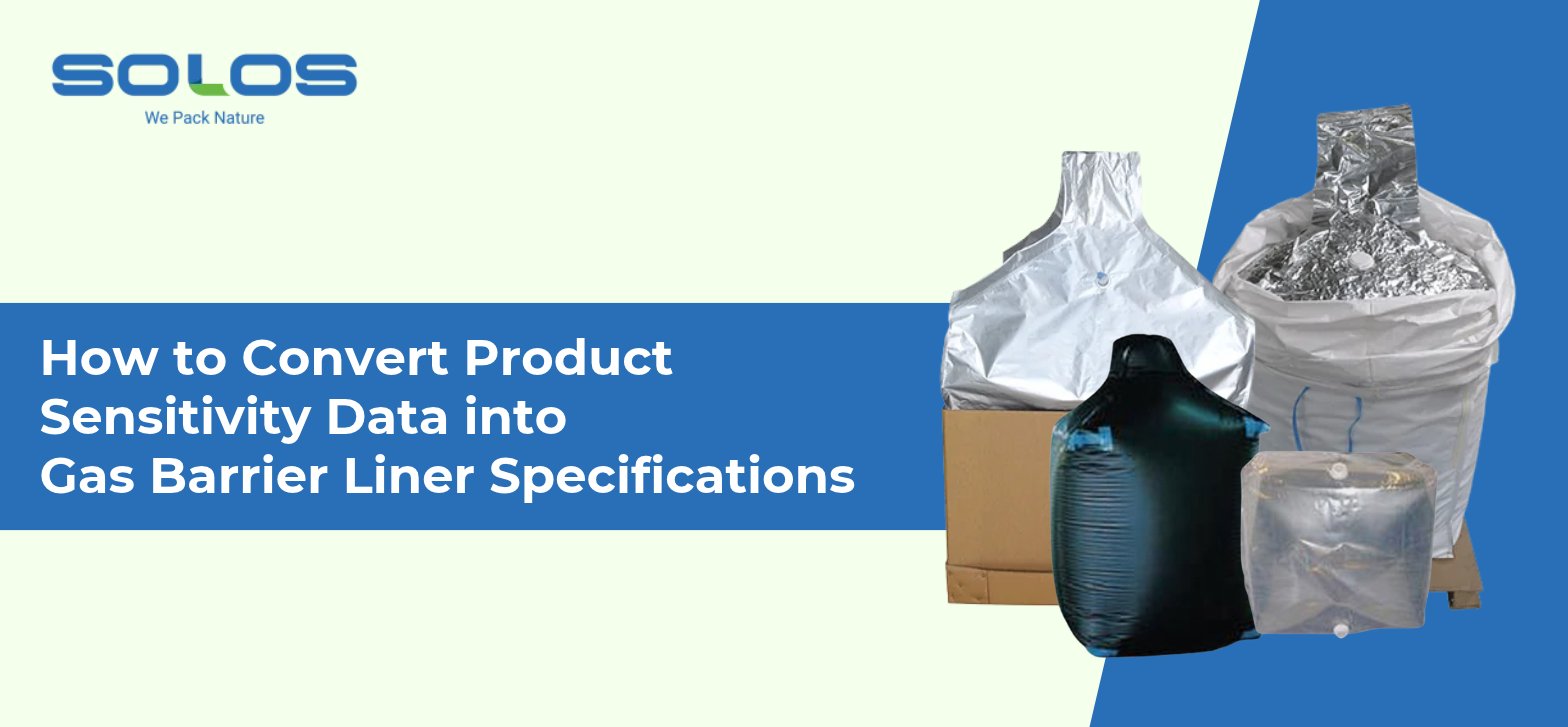
Products can lose quality during storage and transportation when gases, moisture or other environmental factors pass through their packaging. For sensitive materials, selecting a suitable liner requires more than choosing a thick plastic film. Businesses need to understand how their products respond to environmental exposure and translate that information into measurable packaging requirements.
This is where Gas Barrier Liner Specifications become important. By analyzing product sensitivity data, manufacturers can determine which gases require control, what level of barrier protection the product needs and which liner structure may provide suitable performance.
At Solos Polymers, understanding product requirements helps businesses evaluate packaging and liner solutions for different applications. This guide explains how to convert product sensitivity data into practical specifications, assess gas permeability in packaging and verify that the selected liner meets the product’s protection requirements.
What Is Product Sensitivity Data in Packaging?
Product Sensitivity Data describes how a product responds to environmental conditions during storage, handling and transportation. It helps packaging teams identify the factors that can affect product quality, stability, safety or usability.
Depending on the product, this data may include:
-
Sensitivity to oxygen, carbon dioxide, nitrogen or other gases
-
Moisture absorption and water vapor sensitivity
-
Acceptable temperature and humidity ranges
-
Exposure limits and expected storage duration
-
Changes in color, odor, texture, chemical composition or performance
-
Required shelf life or storage stability
-
Sensitivity to contamination and external odors
For example, a moisture-sensitive powder may require protection against water vapor, while a product that oxidizes easily may need a stronger oxygen barrier. Some products require protection against both.
Packaging teams should collect this information before selecting a liner. Without a clear understanding of product sensitivity, they may specify unnecessary barrier performance or choose a liner that does not provide adequate protection.
Why Do Gas Barrier Liner Specifications Matter?
Gas barrier liners help control the movement of gases and, depending on the material structure, moisture and other substances through packaging. They can support product protection during storage and transportation when the liner’s performance matches the product’s requirements.
However, different products need different levels of protection. A liner designed to protect one product may not provide sufficient performance for another.
Well-defined Gas Barrier Liner Specifications help businesses:
-
Establish measurable gas transmission limits.
-
Identify suitable packaging materials and multilayer structures.
-
Reduce the risk of oxidation, moisture damage and unwanted gas exchange.
-
Evaluate packaging performance under expected storage conditions.
-
Compare supplier proposals using consistent technical criteria.
-
Balance product protection, packaging costs and practical handling needs.
The goal is not necessarily to select the material with the lowest permeability. It is to identify the barrier performance that the product actually needs.
Step 1: Identify the Product’s Main Sensitivity Risks
Start by determining which environmental factors can affect the product. Different materials respond differently to oxygen, moisture, carbon dioxide and other gases.
Oxygen sensitivity
Oxygen can trigger oxidation in certain foods, chemicals and other sensitive products. Depending on the product, oxidation may affect color, odor, composition or performance.
If oxygen exposure creates the main risk, evaluate the oxygen barrier requirements and establish an acceptable oxygen transmission rate.
Moisture sensitivity
Some powders, granules and hygroscopic materials absorb moisture from the surrounding environment. This can cause caking, changes in flow properties, chemical instability or reduced product quality.
For these applications, evaluate the water vapor transmission rate and the humidity conditions expected during storage and transportation.
Gas composition sensitivity
Some products require a controlled internal atmosphere. Others may release gases or react with gases in the surrounding environment.
Determine whether the packaging must restrict gas entry, gas loss or both. This distinction influences the material selection and the testing approach.
Odor and aroma sensitivity
Products can absorb unwanted odors or lose desirable volatile compounds through packaging. When these risks matter, assess the relevant barrier properties instead of relying only on oxygen or moisture measurements.
Once you identify the main risks, prioritize them according to their impact on product quality and the required storage period.
Step 2: Convert Product Sensitivity into Measurable Packaging Barrier Requirements
Product sensitivity data becomes useful when you translate it into measurable packaging performance criteria.
For example, a statement such as “the product is sensitive to oxygen” does not provide enough information for a packaging supplier. The supplier needs a defined oxygen transmission target, the test conditions and the expected service requirements.
Use the following approach to build your initial specification.
1. Define the acceptable product condition.
Determine which quality characteristics must remain within acceptable limits throughout storage and transportation.
2. Establish the exposure period.
Specify the required storage duration, transportation time and expected environmental conditions.
3. Identify the critical gases or vapors.
Determine whether oxygen, water vapor, carbon dioxide, other gases or volatile compounds present the main risk.
4. Set measurable transmission limits.
Use product stability data, relevant testing, validated packaging performance or qualified engineering calculations to establish the maximum acceptable transmission.
5. Include a suitable safety margin.
Account for variations in manufacturing, temperature, humidity, handling and actual storage conditions. Define the margin based on the product’s risk and supporting technical evidence.
6. Document the acceptance criteria.
Specify the test method, units, conditions and acceptable results so that suppliers can evaluate materials consistently.
This process turns general product protection goals into practical Packaging Barrier Requirements that a manufacturer can assess and verify.
Step 3: Understand Gas Permeability in Packaging
Gas permeability in packaging describes how readily a gas moves through a packaging material under a given set of conditions. The material’s polymer structure, thickness, temperature, humidity and the gas itself can influence its performance.
Three related measurements help packaging teams evaluate barrier performance.
Gas Transmission Rate (GTR)
GTR measures the amount of a particular gas that passes through a specified area of material over a defined period under stated test conditions.
It helps packaging teams compare how much gas may pass through different films when they use comparable testing conditions.
Oxygen Transmission Rate (OTR)
OTR measures the rate at which oxygen passes through a packaging material. It is particularly relevant when oxygen exposure can affect product stability or quality.
A lower OTR generally indicates a stronger oxygen barrier under the specified test conditions.
Water Vapor Transmission Rate (WVTR)
WVTR measures how much water vapor passes through a packaging material over a defined period and area under specified conditions.
A lower WVTR generally indicates a stronger water vapor barrier under those conditions.
These measurements are not interchangeable. A material may provide strong oxygen protection but offer a different level of moisture protection. Packaging teams must evaluate each property that matters to the product.
When comparing test results, always check the temperature, relative humidity, pressure conditions, specimen thickness and test method. Results obtained under different conditions may not provide a reliable direct comparison.
Step 4: Select the Right Gas Barrier Liner Structure
After establishing the required barrier performance, evaluate the materials and structures that could achieve it.
Gas Barrier Liner Selection depends on more than a single material property. The liner must provide the necessary protection while meeting the application’s mechanical, chemical and handling requirements.
Standard polyethylene liners
Polyethylene liners can suit many applications that need moisture protection, containment and flexible packaging. However, standard polyethylene does not automatically provide the oxygen barrier required for every sensitive product.
Evaluate its measured barrier performance against the product’s specifications before selecting it.
EVOH barrier structures
Ethylene vinyl alcohol, commonly known as EVOH, can provide strong oxygen barrier performance in suitable packaging structures. However, moisture and temperature conditions can affect its barrier performance.
An EVOH-based structure may suit products requiring oxygen protection, but the complete multilayer construction must meet the specified performance under actual service conditions.
Aluminium foil-based structures
Aluminium foil can provide a strong barrier against gases, moisture and light when the packaging structure remains intact. Its performance depends on foil integrity, thickness, seals and the overall package design.
Folding, flexing, punctures and other damage can affect barrier integrity, so testing the complete liner is important.
Multilayer barrier liners
Multilayer structures combine materials with different properties. One layer may provide mechanical strength, another may support sealing, and another may provide the main barrier function.
This approach allows manufacturers to balance protection, flexibility, durability and processing requirements.
At Solos Polymers, businesses can explore packaging and liner options based on their application requirements. The final structure should be selected using verified material data and the required barrier specifications, rather than assuming that one construction suits every product.
Step 5: Account for Storage Conditions and Product Compatibility
A liner that performs well in a laboratory test may behave differently under actual operating conditions. Temperature, humidity, chemical exposure and mechanical stress can influence packaging performance.
For accurate Product Compatibility and Packaging assessments, consider the following factors.
Temperature: Higher temperatures can increase gas transmission through many polymer materials. Evaluate the liner under conditions representative of the intended application.
Humidity: Moisture can affect the barrier performance of certain materials, particularly humidity-sensitive barrier layers. Include relevant humidity conditions in the evaluation.
Chemical compatibility: Confirm that the liner can withstand direct contact with the product and any cleaning agents or other substances involved in the process.
Mechanical stress: Filling, movement, stacking, handling and transportation can cause stretching, abrasion or punctures that compromise the barrier.
Seals and connections: The liner material may meet the required transmission limit, but poor seals, closures or damaged joints can still allow gas exchange.
Storage duration: Longer storage periods may require stricter control of cumulative gas and moisture transmission.
Assessing these conditions helps ensure that the selected liner can maintain its required performance throughout the product’s intended service life.
Step 6: Calculate and Validate the Required Barrier Performance
Product sensitivity data can help establish a preliminary transmission budget, but the calculation must reflect the product’s actual requirements.
For a simplified application, the total amount of gas entering through a packaging surface depends on the transmission rate, exposed area and exposure time when the transmission rate remains approximately constant under the stated conditions.
For example:
-
Required oxygen transmission rate: 0.5 cm³/m²/day
-
Exposed liner area: 2 m²
-
Storage duration: 30 days
Under the simplified assumption of constant transmission, the estimated oxygen transmission through the material would be:
0.5 × 2 × 30 = 30 cm³ of oxygen.
This is an illustrative calculation, not a universal packaging specification. It assumes that the stated transmission rate applies throughout the storage period and does not account for changes in gas concentration, pressure, temperature, humidity, seals or package geometry.
The acceptable transmission rate must come from product stability requirements, validated testing or a suitable engineering assessment. Do not derive it from an arbitrary target.
Common Mistakes to Avoid During Gas Barrier Liner Selection
Even when businesses collect detailed product data, several mistakes can lead to unsuitable packaging decisions.
-
Choosing by material name alone: Different grades and multilayer constructions can provide different barrier performance.
-
Ignoring humidity and temperature: Laboratory results may not represent actual storage conditions.
-
Confusing OTR with WVTR: Oxygen and water vapor transmission measure different properties.
-
Focusing only on film thickness: A thicker film does not automatically provide the required barrier performance.
-
Ignoring seals and package integrity: Defects can compromise protection even when the material itself performs well.
-
Using unverified assumptions: Product sensitivity data should support the transmission target, not merely a general claim about sensitivity.
-
Skipping finished-package testing: Material-level measurements cannot identify every weakness in the complete liner system.
Avoiding these mistakes helps businesses make informed packaging decisions and establish specifications that suppliers can verify.
your packaging requirements and identify the information needed to evaluate a suitable liner.
Conclusion
Converting product sensitivity data into Gas Barrier Liner Specifications requires a clear understanding of the product, its exposure risks and its required storage conditions. By identifying critical gases, setting measurable transmission limits, evaluating suitable materials and validating the finished liner, businesses can make more informed packaging decisions.
The right approach balances product protection, material compatibility, mechanical performance and practical operating requirements. Rather than selecting a liner based on general claims, use measurable specifications and relevant testing to verify its suitability.
Solos Polymers works with businesses seeking flexible packaging and liner solutions for different applications. By clearly defining product sensitivity and packaging barrier requirements, businesses can take a more systematic approach to selecting liners that support product quality throughout storage and transportation.
